Table of Contents
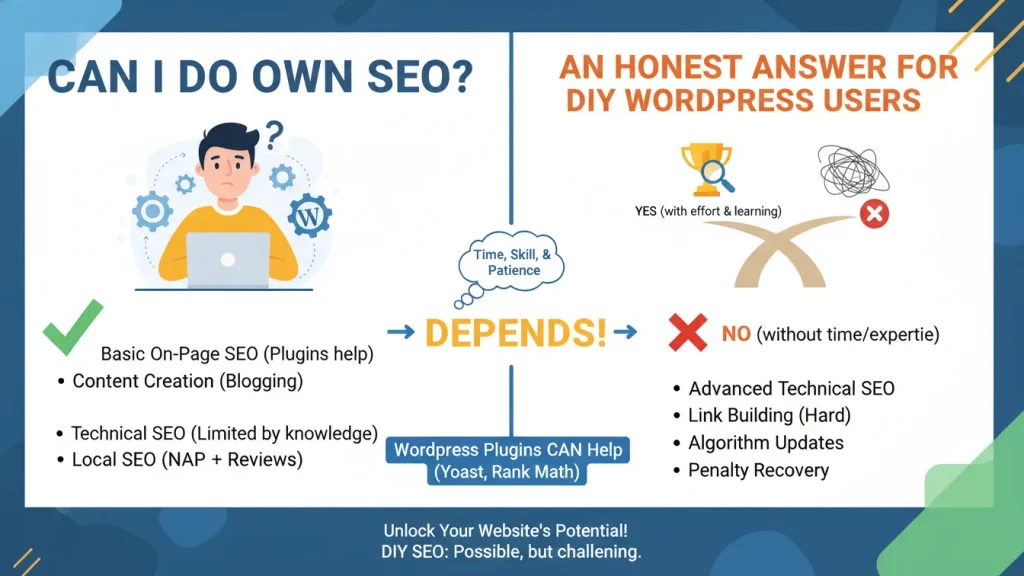
Can I do my own SEO? is a question many WordPress users ask early on. However, the answer depends on expectations, competition, and how much time you can realistically invest.
As a DIY WordPress user, blogger, or small business owner, asking can I do my own SEO makes sense because many fundamentals sit within reach. In fact, you can handle several core tasks without paid tools or advanced technical knowledge. Although this may be true, limits appear once goals expand and competition increases.
In this article, I explain what you can manage on your own, where DIY SEO often slows progress, and how to decide next steps. The goal stays practical clarity, especially for people still asking can I do my own SEO.
1. What You Can Do Yourself and Often Do Well
To begin with, most DIY users succeed with on-page SEO and content-related work. These areas stay visible, feel easier to learn, and connect directly to user experience.
On-page SEO generally includes titles, headings, internal links, and page structure. When done correctly, this work improves clarity for both users and search engines. After all, Google prioritizes structure and usefulness rather than shortcuts.
According to Google Search Central, helpful, people-first content with clear organization performs better over time.
In addition, content creation works well for DIY users. Writing to answer real questions, rather than forcing keywords, builds trust and long-term visibility. This approach matters especially under Google’s Helpful Content System.
Internal linking also plays a larger role than many expect. As has been noted, it improves navigation and helps search engines understand page importance.
Google confirms that internal links support crawling and site hierarchy.
2. Where DIY SEO Usually Starts to Fail
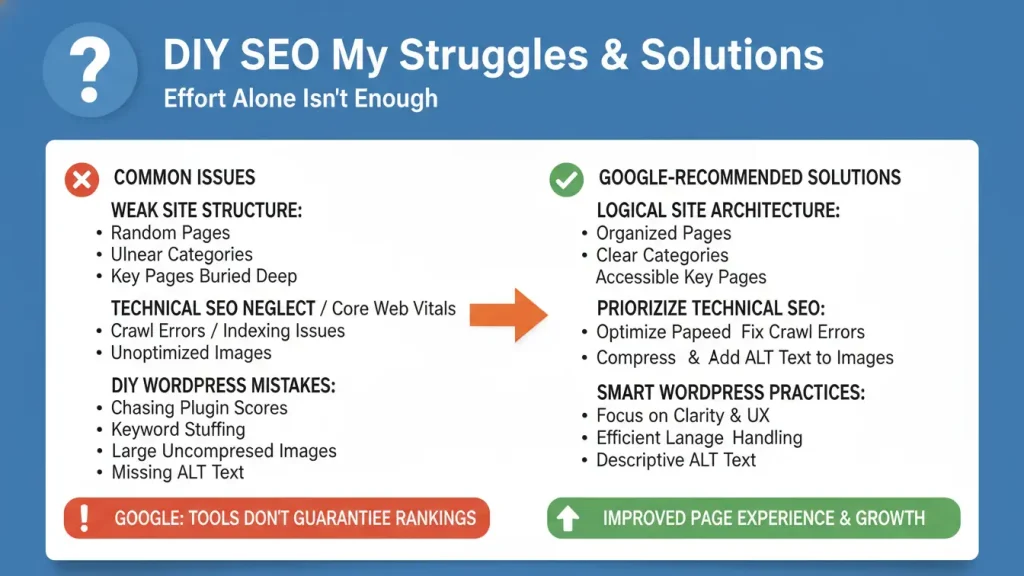
However, effort alone does not solve everything. This is often where people questioning Can I Do My Own SEO begin to feel stuck.
One common issue involves weak site structure. Pages appear randomly, categories stay unclear, and key pages sit too deep. In that case, even strong content struggles to perform.
Google recommends logical site architecture for both users and crawlers.
Another key point is technical SEO. Many site owners skip it because it feels invisible. Technical SEO includes page speed, Core Web Vitals, crawl errors, indexing, and image optimization, all of which affect page experience.
DIY WordPress sites also repeat familiar mistakes. Altogether, these issues limit growth:
- Chasing plugin scores instead of clarity
- Keyword stuffing
- Large uncompressed images
- Missing ALT text
Google clearly states that SEO tools do not guarantee rankings.
3. A Real-World Example: When DIY SEO Slows Growth
Take the case of a blog monetized with AdSense. The owner believed can I do my own SEO meant publishing more content alone. As a result, traffic plateaued and revenue declined.
After that, the site improved structure, internal links, and technical basics. Subsequently, rankings recovered and earnings followed.
This pattern appears often. DIY SEO fails not because people avoid work, but because they work in the wrong order.
4. How Long Does DIY SEO Take to Show Results?
In general, SEO takes time. Most sites see early movement within about three months. That is to say, better indexing and clearer signals appear first, not instant rankings.
Google describes SEO as a long-term process.
For anyone still asking, Can I do my own SEO, patience matters just as much as consistency.
5. When Does Hiring an SEO Make Sense?
DIY SEO works at first. However, once competition increases or revenue becomes a priority, professional experience adds value.
SEO professionals bring prioritization and pattern recognition. They know what to fix first and what to ignore. Even so, asking can I do my own SEO remains valid if learning time and focus are available.
6. SEO Basics Every Business Owner Should Understand
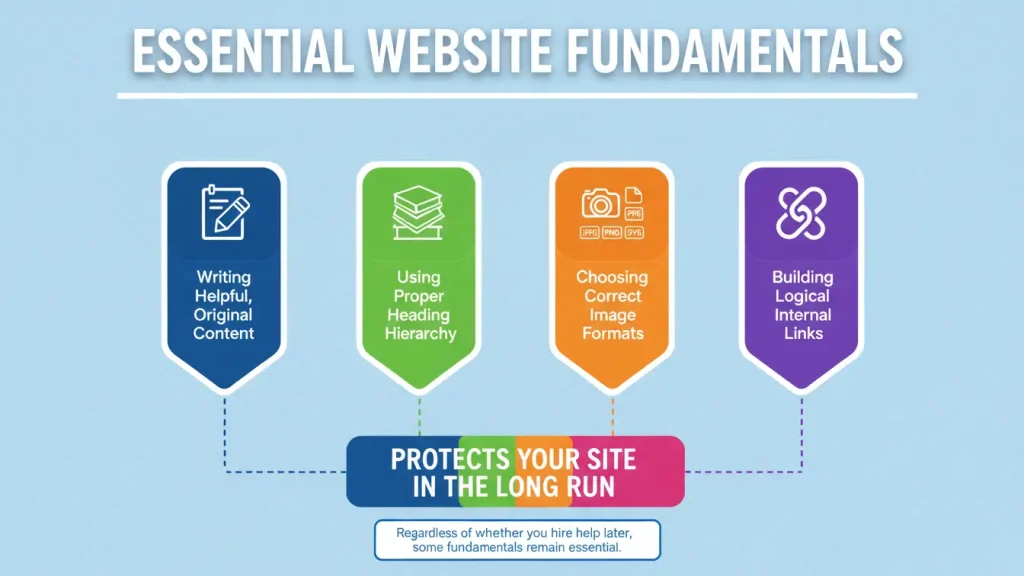
Regardless of whether you hire help later, some fundamentals remain essential:
- Writing helpful, original content
- Using proper heading hierarchy
- Choosing correct image formats
- Building logical internal links
In the long run, these habits protect your site.
7. Tools: What Helps vs. What Distracts
At the present time, free tools cover most beginner needs. Google Search Console, GA4, Keyword Planner, PageSpeed Insights, and free SEO plugins provide enough insight early on.
Advanced tools help only if the basics are clear. Many beginners asking, Can I do my own SEO get distracted by scores and metrics instead of usefulness.
Google emphasizes creating content for people rather than chasing numbers.
8. Is SEO Dead?
SEO is not dead. Installing a plugin does not equal SEO, just as buying equipment does not create skill. Real SEO focuses on people, intent, and clarity.
Google reduced visibility for low-effort content. As long as people search, SEO remains relevant.
9. Final Answer: Can You Do Your Own SEO?
So, can I do my own SEO? Yes, you can. However, success requires consistency, learning, and awareness of limits. DIY SEO works well at the beginning. Professional SEO helps sites scale.
All things considered, knowing when to shift matters as much as knowing how to start.
FAQ
a. Can I Do My Own SEO as a WordPress beginner?
Yes, you can do your own SEO as a WordPress beginner. Focusing on on-page SEO, content creation, and internal linking allows most DIY users to improve rankings without advanced technical skills. However, technical SEO and site structure may require learning or professional guidance.
b. What are the key areas I can handle if I Do My Own SEO?
If you do your own SEO, you can manage on-page SEO (titles, headings, meta descriptions), create helpful content, and set up internal links. These actions have a direct impact on user experience and search visibility.
c. Where do DIY SEO efforts usually fail?
DIY SEO often fails in technical areas, such as page speed, Core Web Vitals, indexing, and site structure. Common mistakes also include misusing plugins, keyword stuffing, and missing ALT text for images.
d. How long does it take to see results if I Do My Own SEO?
Most websites start seeing measurable improvements in about three months when SEO is done consistently. This includes better indexing, improved crawlability, and early traffic growth.
e. When should I consider hiring a professional SEO?
Consider hiring professional SEO when competition increases, traffic goals grow, or revenue becomes a priority. Professionals bring technical depth, pattern recognition, and can scale results efficiently, while DIY SEO is best for starting stages.